
What happened
Character.AI filed for Chapter 11 on October 12 and started a court-supervised sale process, according to Reuters. The platform had roughly 12 million active users, but court filings said it was losing about $8 million to $9 million each month.
The losses reflected more than the cost of serving user requests. The company faced high computing bills, expenses for AI talent, and legal, regulatory, and operational pressures. Those costs continued even as the service attracted users.
Disney agreed to act as the stalking-horse bidder, offering $20 million for a non-exclusive, perpetual license to certain intellectual property and claims. The platform remains available during the sale process. Character.AI has said it could be wound down if no buyer continues operating it, as reported by Business Insider.
The exact outcome remains unconfirmed. The filing creates a process for selling assets, not a guarantee that the service will continue under new ownership.
Why it matters
For business owners, the important number is not the user count. It is the cost of serving each user, including the work that sits around the model.
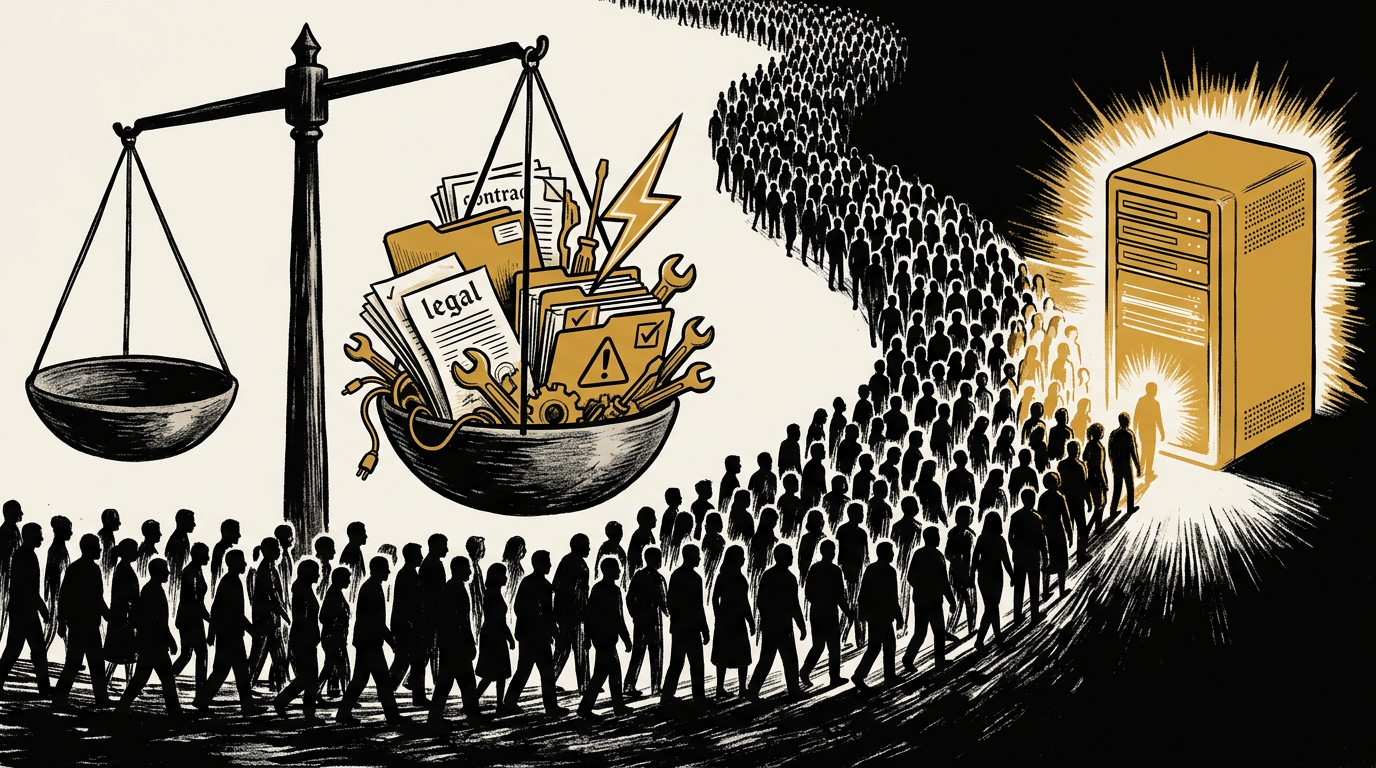
An AI product can look successful in adoption reports while losing money on every interaction. Inference costs may rise with usage. Specialist hiring can become unavoidable. Trust-and-safety reviews, customer support, legal work, and escalation capacity can turn a seemingly automated workflow into a labor-intensive operation.
That changes how an AI business case should be evaluated:
- Model production economics: Estimate compute and human costs at realistic usage levels, not just during a pilot.
- Risk-adjusted operations: Include safety, privacy, regulatory, and legal exposure in the cost model.
- Stop conditions: Set thresholds for gross margin, incident volume, or cash burn before expansion continues.
- Fallback plans: Decide whether the product can be narrowed, priced differently, or moved to a less expensive operating model.
The lesson is not that user growth has no value. It is that growth cannot substitute for a viable operating model. Before adopting AI, ask what happens when usage succeeds—and who pays for the resulting work.
Sources
- https://reuters.com/legal/litigation/characterai-files-bankruptcy-agrees-sell-some-assets-disney-20-million-2026-10-13
- https://businesswire.com/news/home/20261012656385/en/Character.ai-Initiates-Voluntary-Chapter-11-Proceeding-to-Facilitate-Value-Maximizing-Sale-Process
- https://businessinsider.com/character-ai-owes-google-law-firms-million-court-filings-show-2026-10
- https://washingtonpost.com/technology/2026/10/13/ai-app-that-triggered-kids-safety-fears-will-sell-assets-disney